Coaxial vs Component Speakers: A Distributor’s Buying Guide
Choose coaxial or component speakers by sales channel, installation needs, complete package cost and sample evaluation. A practical guide for car audio distributors and private-label buyers.
ZEMINGA speaker range should fit the way your customers buy and install audio. A retailer selling replacement pairs has different needs from an installer building a tuned front-stage system. Choosing between coaxial and component speakers starts with that difference, not with a claim that one design always sounds better.
For importers, distributors and private-label brands, the decision affects the product itself, the installation brief, what goes in the box and the support your dealers will need.
The short answer
Choose a coaxial platform when combining the woofer and tweeter in one assembly suits the installation and sales channel. Choose a component platform when the project benefits from separate driver positions and the installer can accommodate the mounting, filtering and setup work.
Neither label guarantees sound quality, vehicle compatibility or a particular power requirement. Evaluate the actual product and the complete installation.
What is physically different?
Coaxial: drivers combined in one assembly
A typical two-way coaxial places a tweeter on the same axis as the woofer. The assembly occupies one main speaker location. It still needs a suitable signal path and filtering; “coaxial” does not mean the drivers work without a crossover function.
Check the tweeter’s front projection as well as the basket depth. An existing grille, connector or mounting ring can still prevent a straightforward replacement. Avoid advertising “plug and play” without checking the exact vehicle configuration.
Component: drivers mounted separately
A typical two-way component set separates the woofer and tweeter. A passive version uses a suitable crossover network to divide the signal. Confirm exactly which crossover parts and mounting accessories are supplied.
Separate mounting gives the installer more control over tweeter position and aiming. The result still depends on the vehicle, driver integration and tuning. Three-way sets add another driver band and need their own installation and system plan.
Browse our coaxial speaker range and component speaker range. The ZM-C65A product page and ZM-X65W V2 configuration page provide product-specific starting points, not a performance ranking between the two.
Product examples: coaxial and component speakers
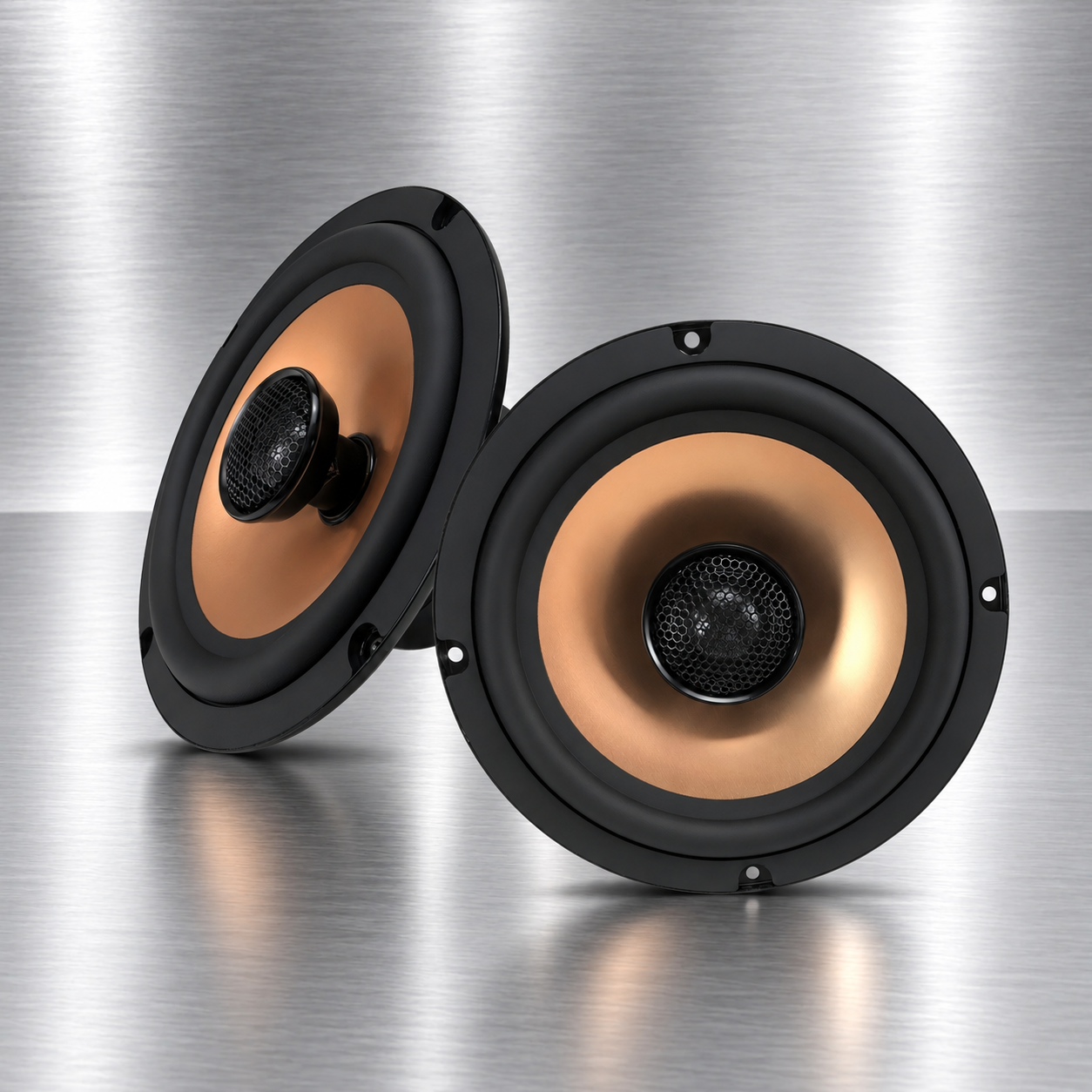 ZM-C65A — ZEMING product photo. Confirm dimensions from the current drawing. | 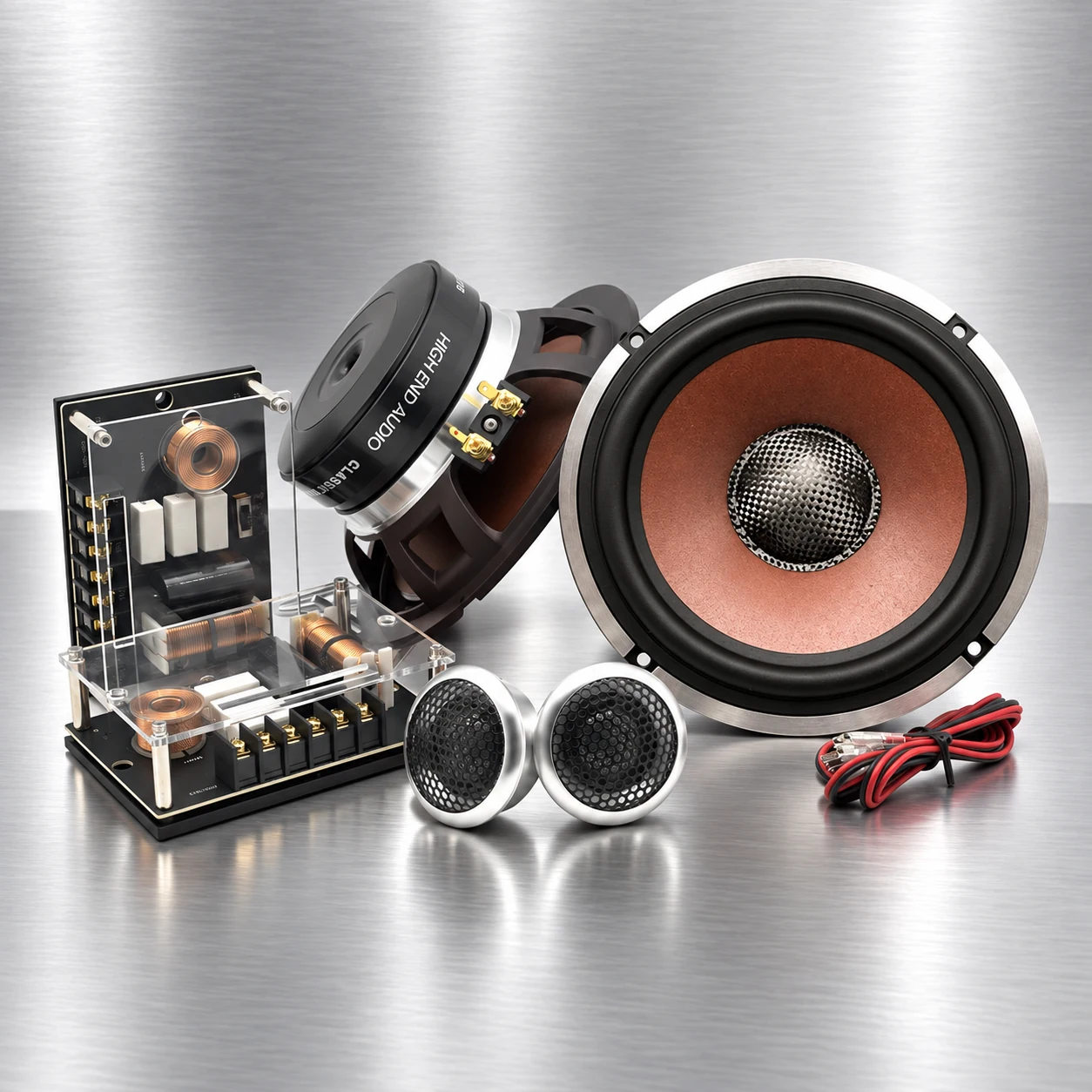 ZM-X65W V2 — existing component-set image. Confirm supplied items in the quotation. |
Choose for the sales channel
Replacement pairs and retail-led sales
A coaxial option can be practical where the buyer wants fewer separately mounted parts. Before ordering, establish which vehicles or installation envelopes you intend to support and what adapters or connectors are needed. Make those requirements visible in the product description and package list.
Installer-led upgrades
A component option can suit dealers who can assess tweeter positions, fit the crossover parts and set up the system. Check that the vehicle offers suitable mounting locations. Include installation information and agree what support material your dealer needs.
A range serving both channels
You can offer both formats, with clear application notes for each SKU. Do not create a fixed buying ratio without evidence from your own dealer inquiries and sales. Start with a manageable selection and use sample feedback to decide which configurations to expand.
Compare the complete delivered solution
A lower unit price does not necessarily mean a lower installed cost. Ask quotations to separate these items:
The selling unit: one driver, one pair or one complete set.
Included tweeters, crossover parts, grilles and mounting hardware.
Any additional adapters, connectors or installation materials.
Installation and setup work expected from the dealer.
Packaging, instructions and identification of replacement parts.
This makes the offers easier to compare. It also reduces disputes about a “missing” crossover or accessory that was never included in the quoted configuration.
Passive and active setups need different plans
In a passive component system, the crossover divides an amplified signal between drivers. In an active setup, filtering happens before the power-amplifier stages, and the drivers are supplied through appropriate separate amplifier channels.
Do not assume a set sold with passive crossovers is ready for an active installation. Confirm channel requirements, filtering, protection and the supplier’s instructions. A separate tweeter should not be connected to an unfiltered full-range output unless the specified protection and filtering are provided.
The word “component” alone does not tell you whether a separate amplifier is mandatory. Check the exact speaker requirements, available source output and intended operating level.
Approve samples in the intended use case
Ask the evaluator to record what was tested and what changed between comparisons:
Can the complete assembly fit behind the intended grille, including terminals and adapters?
For a component set, where can the tweeter and crossover be mounted, and can the wiring be routed properly?
What source, amplifier, filters and listening positions were used?
Were comparison levels matched, rather than using equal positions on two volume or gain controls?
Are the package list and instructions clear enough for the intended dealer?
Record the agreed acceptance criteria and sample revision. Listen for integration between drivers as well as tonal balance, and document any abnormal noise. Do not turn one vehicle evaluation into a claim of universal compatibility.
For detailed checks on rating definitions and dimensions, use our car speaker specification checklist.
Prepare a clear OEM/ODM inquiry
Send the intended sales channel, target vehicles or installation limits, estimated quantity and preferred format. State whether the offer should include passive crossover parts, grilles, adapters and branded packaging.
Ask the supplier to identify deviations and list the exact quoted configuration. Confirm sample arrangements, MOQ, lead time and any customization feasibility for the specific project. Do not assume those terms are the same for every platform.
Buyer FAQ
Are component speakers always better than coaxial speakers?
No. The category describes an arrangement of drivers. Product quality, installation, filtering and tuning all affect the result. A well-suited coaxial can be a better commercial choice than a component set that the channel cannot install correctly.
Do coaxial speakers automatically fit a factory opening?
No. Check the drawing, front clearance, depth, fixing points, connectors and original audio-system configuration.
Does every component set include external crossover boxes?
No. The filtering arrangement and supplied parts vary. Approve the exact package list and wiring instructions for the proposed set.
Should a distributor carry both types?
That depends on the customers served. Use dealer demand, installation capability and sample feedback to decide. There is no universal stocking ratio.
Discuss your speaker range with ZEMING
Request a product catalog or quotation. Tell us your target channel, preferred speaker format, installation limits and quantity. For a branded range, include your package requirements and discuss OEM/ODM options. The next useful step is a defined configuration and sample brief that your team can evaluate.